
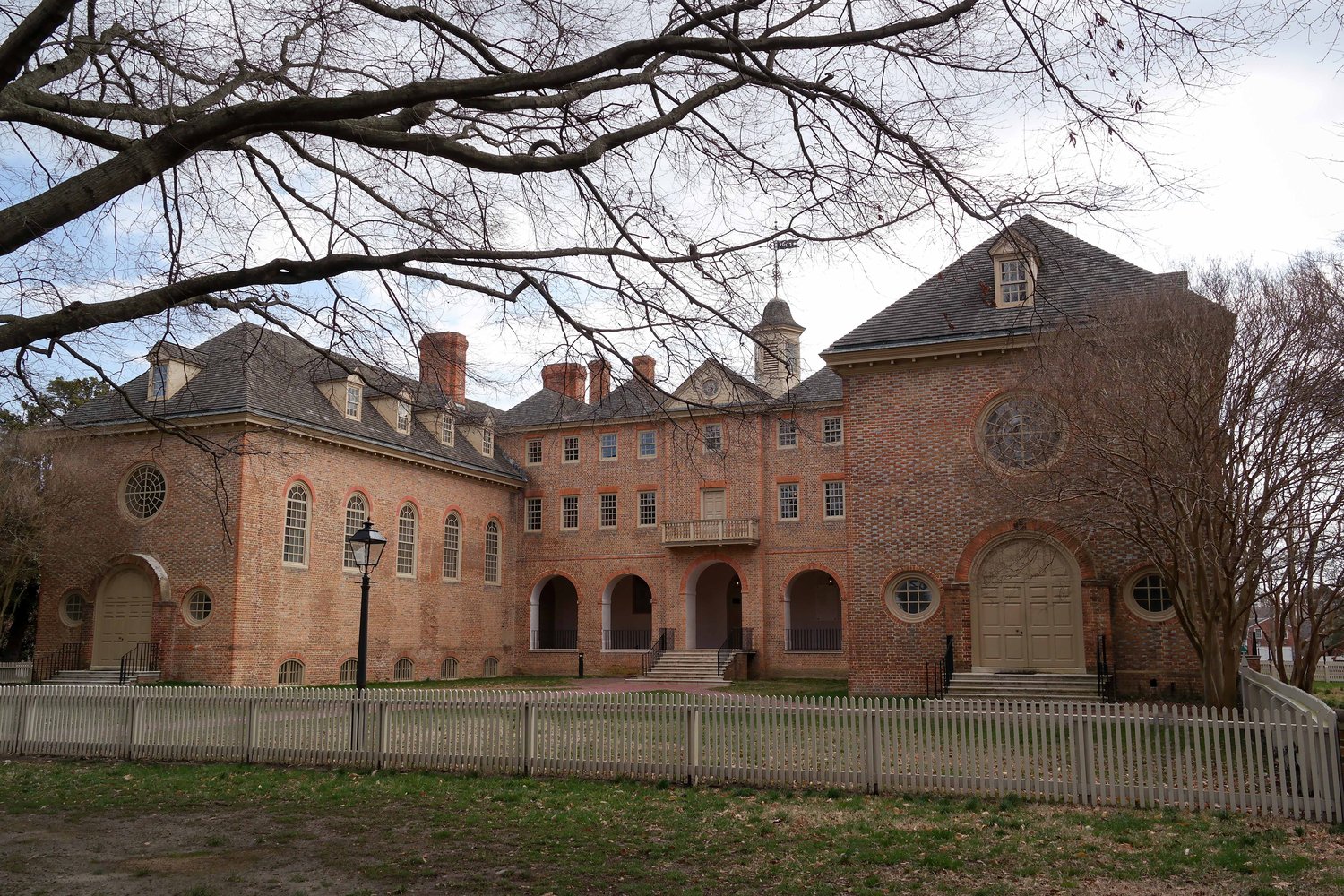
The Wren Building at William & Mary in Williamsburg, Virginia, is described by Wikipedia as the oldest college building in the United States, and by campus tradition as the most haunted building on the old campus. Its stories include wandering soldiers, footsteps in empty halls, a restless architect and tunnels leading to burial vaults. The history behind them is real and, in places, grim: fires, wartime hospitals, enslaved labor and plundered tombs. The ghosts are student legend, and the university’s own writers say as much.
What the record shows
William & Mary says the Wren Building was constructed between 1695 and 1700. Wikipedia adds that the eastern and northern wings were finished by 1699, and that the original builders included indentured servants and enslaved people, with the hardest labor done by the enslaved workers of a contractor. The design is often credited to Sir Christopher Wren, but historians have debated that since an early eighteenth-century professor first made the claim, and Wikipedia says no conclusive evidence supports or contradicts it. The building did not take Wren’s name until 1931.
Fire has damaged it repeatedly. A fire on the night of October 29, 1705 gutted the first building, and the second was usable by 1716. Another fire on February 8, 1859, according to Wikipedia, gutted the second, with no one fatally injured. In 1862, Union soldiers occupying Williamsburg set a fire that destroyed the third. A university advancement article notes that carpenters and masons reused the old walls and foundations each time. The present building was restored to its early eighteenth-century appearance between 1928 and 1931, and much of the original 1695 masonry survives in its walls.
The chapel wing was built from 1729 to 1732, and beneath it lies a crypt. A university alumni magazine says the crypt was built in 1729 and that it is not open to the public. The advancement article lists burials there that a 1903 statement, quoted in a 1931 research report, described as “various old Virginians,” including Sir John Randolph, Lord Botetourt, Peyton Randolph, Bishop James Madison and Chancellor Robert Nelson. A report from the 1970s, it adds, indicates that two of the people in the vaults have not been identified.
The building also served as a hospital. Wounded French soldiers convalesced or died there for months after the 1781 battle at Yorktown, according to the advancement article, and about eighty years later it again held wounded soldiers, this time Confederate. Union forces occupied the town in 1862.
The legend
The ghost stories come mostly from students. The alumni magazine says they are based on student accounts and calls the Wren “objectively the most haunted building on campus.” It reports these tales:
- Soldiers: Students have reported seeing soldiers in the halls, though the magazine says it is unclear which side they served, because they vanish before anyone can see a uniform.
- Footsteps: Late-night visitors may hear steps following them, which the magazine suggests might be the architect, the entombed Virginians, or only the visitor’s own echo.
- The architect: The advancement article lists a French soldier on the staircases and Sir Christopher Wren “lurking behind a door” among campus rumors.
- The tunnels: Undergraduates believe the steam tunnels beneath old campus lead to the crypt.
The magazine also notes that ghost tours from Colonial Williamsburg wander over to old campus. Nothing in either article gives dates or witnesses for individual sightings, and none is corroborated outside student word of mouth.
What the record does not support
The tunnel story is the clearest case. The advancement article reports that the director of the historic campus said the tunnels “are not friendly places” and have never intersected the burial space under the chapel, yet students keep believing they do. The tunnels carried heating pipes, according to the same article, and the magazine says they are not open to the public.
The crypt has a real history of disturbance, but it is documented in modest terms. Faculty minutes of November 22, 1859, quoted by the advancement article, record that the recent fire had cracked the vault holding Peyton Randolph, and that his coffin was seen to be in “an excellent state of Preservation.” During the Union occupation, soldiers reportedly took silver name plates from coffins, including Lord Botetourt’s. In the twentieth century, a Colonial Williamsburg researcher found the Greek letters of two fraternities scratched on the side of one vault, with candle stubs, bottles and a single bone beside an opened coffin. A rumor that one fraternity stole an entire skeleton and keeps it locked away is reported only as whispers in the campus Greek community. No source confirms it.
No source offers physical evidence of a haunting. The advancement article’s writer, a student, notes that the stories “stem from fact” and then asks where the stories would come from if no dark secrets lay in the walls. The authors of both pieces treat the ghosts as part of campus tradition, not as events.
Visiting
The university’s visiting page says the Wren Building remains accessible to visitors during a preservation project that will replace the roof and waterproof the foundation, and that tours are given by members of the Spotswood Society. No hours or fees were found in the sources reviewed, so none are given here; check the university’s visitor page before traveling. The crypt and tunnels are closed to the public.
Around the building, a bronze replica of the Lord Botetourt statue stands nearby, according to Wikipedia, as does the Hearth: Memorial to the Enslaved. The 650-pound Wren bell, rung by graduating students on the last day of classes, is among the campus traditions the university describes. Because the Wren is a working part of the campus, a respectful visit stays on the paths and keeps to the public rooms.
Frequently asked questions
Is the Wren Building the oldest college building in the United States?
William & Mary’s advancement writers and Wikipedia describe it that way. It was built between 1695 and 1700 and rebuilt after fires in 1705, 1859 and 1862.
Who designed the Wren Building?
Tradition credits Sir Christopher Wren. Historians have long debated this, and no conclusive evidence supports or contradicts it.
Do the tunnels connect to the crypt?
The university’s historic campus director says no. The tunnels never meet the burial space, though students persist in believing they do.
Can visitors go into the crypt?
The alumni magazine says the crypt is not open to the public.
More haunted campuses: Harvard College (Cambridge, MA) and U.S. Naval Academy (Annapolis, MD).
Sources
- William & Mary: Sir Christopher Wren Building: the university’s description of the building, its traditions and the preservation project.
- William & Mary Advancement, October 31, 2017: “Truth stretched and legend upheld”: a student-written feature on fires, the crypt, the tunnels and campus legends.
- William & Mary Alumni Magazine: “The haunts that call old campus home”: student-reported ghost stories for four campus buildings.
- Wikipedia: Wren Building: building history, fires, construction labor and the debate over Wren’s role.
Top image: Wren Building west exposure at William & Mary, Smash the Iron Cage, CC BY-SA 4.0, via Wikimedia Commons